⚔ PROJECT WHIMSICAL'S: The Foul Play ⚔
⚙️ HOW THE QUEST SYSTEM WORKS
The Quest System is designed to provide players with meaningful choices and branching narratives.
Players can approach each quest in multiple ways, with their decisions affecting the story's outcome and the world around them.
This system emphasises player agency, allowing for a variety of playstyles and strategies to be employed.
Players can approach each quest in multiple ways, with their decisions affecting the story's outcome and the world around them.
This system emphasises player agency, allowing for a variety of playstyles and strategies to be employed.
The Goal
The primary goal of the quest system is to create a dynamic and engaging experience for players. By offering multiple paths and outcomes, players are encouraged to explore different strategies and make choices that reflect their personal playstyle.
Each quest is designed to challenge the player's decision-making skills, moral compass, and ability to adapt to changing circumstances.
Each quest is designed to challenge the player's decision-making skills, moral compass, and ability to adapt to changing circumstances.
⚔ THE FOUL PLAY - QUEST SUMMARY
The Foul Play is a narrative-driven quest that challenges players to investigate a series of mysterious events in the village of Stone-Upon-Fleen. Players must navigate through a web of intrigue, uncovering secrets and making choices that will shape the outcome of the story.
The Intro
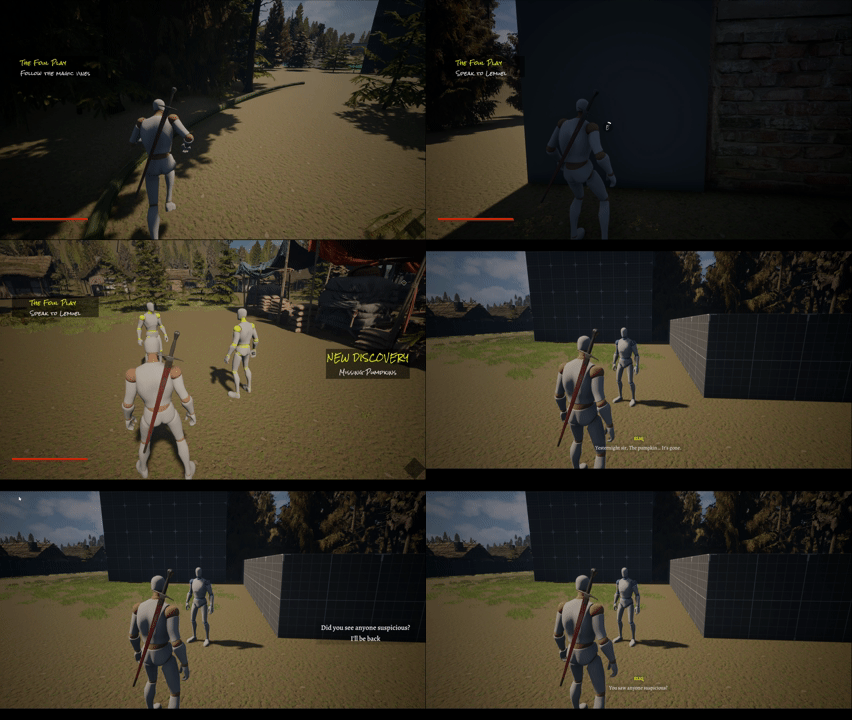
Lemuel has written to Kliq about bad omens plaguing Stone-Upon-Fleen. The village is experiencing bizarre phenomena: missing pumpkins, a foul stench, and villagers falling mysteriously ill. Kliq must meet Lemuel and uncover the truth behind these events-a truth far darker than simple misfortune.
« PLAYTHROUGH VIDEO »
📹 QUEST IN ACTION
Watch Kliq's journey unfold. This playthrough demonstrates investigation mechanics and how player choices shape the narrative.
⚔ THREE PATHS TO DISCOVERY ⚔
🔍 HOW PLAYERS INVESTIGATE
The Foul Play offers three distinct investigation approaches. Each leads to the same truth but shapes how Kliq discovers it.
The Direct Path
Kliq goes straight to Lemuel for answers. Fastest completion but misses contextual clues.
The Investigation Path
Interview townsfolk about 3 clues: missing pumpkins, foul smell, sickness. Gathers more context.
The Onslaught Path
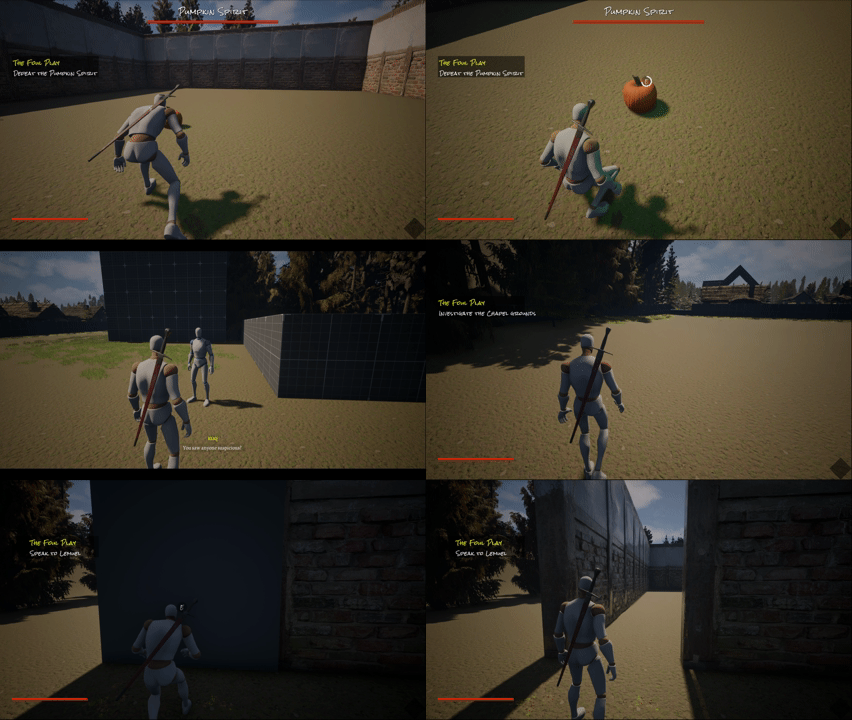
Skip investigation and break into the barn. Requires Onslaught skill investment.
🎮 CORE DESIGN FEATURES
🔀 Multiple Investigation Paths
Three completely different ways to discover the truth, each feeling like a different playstyle.
📊 Attribute-Based Choices
Player-invested skills (Discovery, Charisma, Onslaught, Stealth) unlock dialogue options and story paths.
🎭 Moral Complexity
No "good" or "evil" choice. Each path has wisdom and cost.
🔗 Consequence Tracking
Choices affect future quests, NPC availability, and trust relationships.
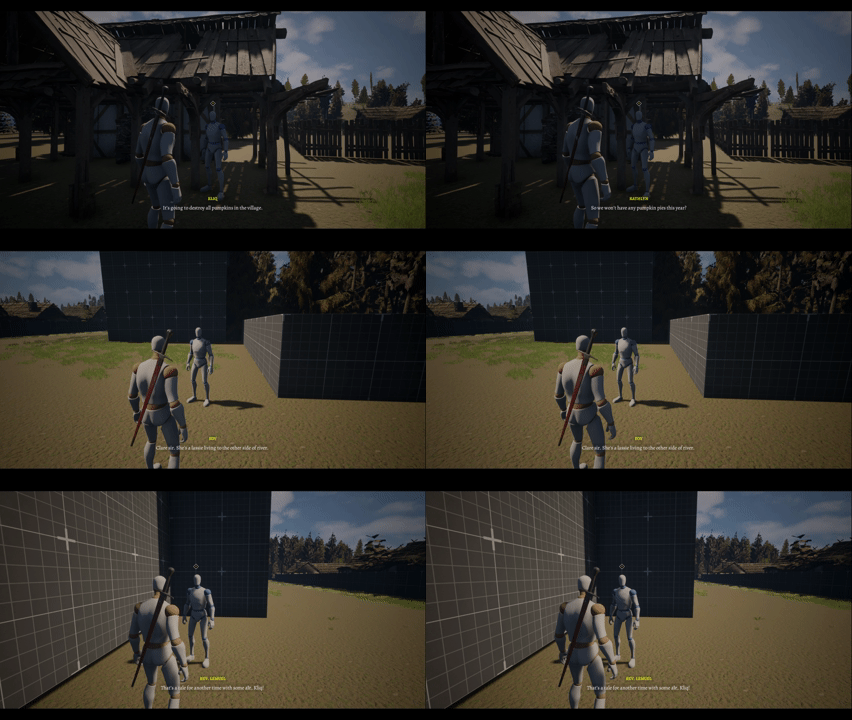
👥 Multiple NPC Perspectives
Lemuel, Clare, Kathlyn, and Foy each have their own truth.
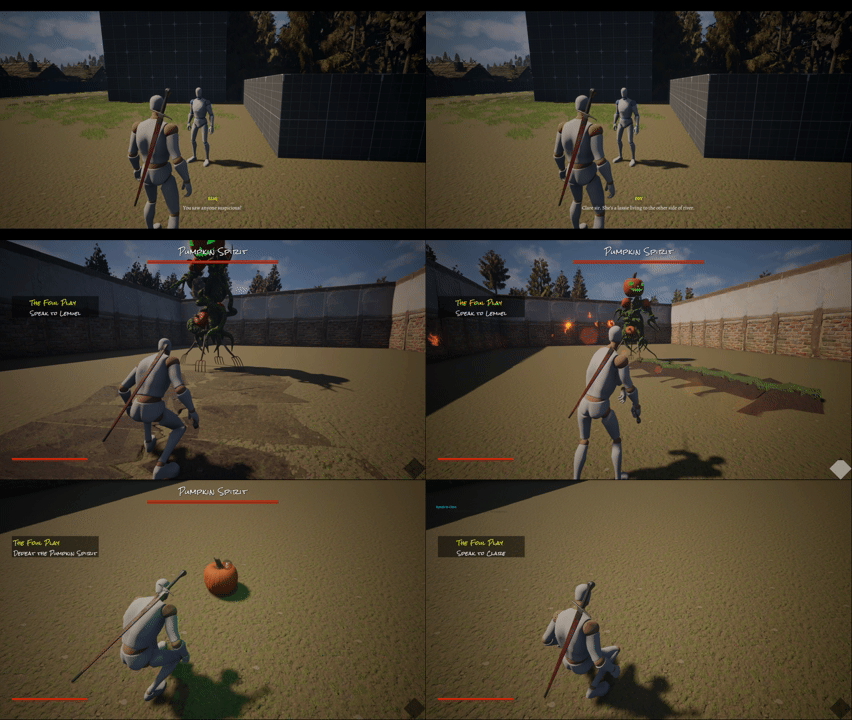
⚡ Playstyle Flexibility
Every playstyle-combat, stealth, diplomatic-has a path to success.
🎨 Design Process
The design process for The Foul Play quest involved several stages, including initial concept development, narrative structuring, and iterative playtesting.
Each stage was crucial in ensuring that the quest provided a compelling and immersive experience for players.
Each stage was crucial in ensuring that the quest provided a compelling and immersive experience for players.
⚔ THE FOUL PLAY - QUEST SUMMARY
The Foul Play is a narrative-driven quest that challenges players to investigate a series of mysterious events in the village of Stone-Upon-Fleen. Players must navigate through a web of intrigue, uncovering secrets and making choices that will shape the outcome of the story.
The Intro
Lemuel has written to Kliq about bad omens plaguing Stone-Upon-Fleen. The village is experiencing bizarre phenomena: missing pumpkins, a foul stench, and villagers falling mysteriously ill. Kliq must meet Lemuel and uncover the truth behind these events-a truth far darker than simple misfortune.
« PLAYTHROUGH VIDEO »
📹 QUEST IN ACTION
Watch Kliq's journey unfold. This playthrough demonstrates investigation mechanics and how player choices shape the narrative.
⚔ THREE PATHS TO DISCOVERY ⚔
🔍 HOW PLAYERS INVESTIGATE
The Foul Play offers three distinct investigation approaches. Each leads to the same truth but shapes how Kliq discovers it.
The Direct Path
Kliq goes straight to Lemuel for answers. Fastest completion but misses contextual clues.
The Investigation Path
Interview townsfolk about 3 clues: missing pumpkins, foul smell, sickness. Gathers more context.
The Onslaught Path
Skip investigation and break into the barn. Requires Onslaught skill investment.
🎮 CORE DESIGN FEATURES
🔀 Multiple Investigation Paths
Three completely different ways to discover the truth, each feeling like a different playstyle.
📊 Attribute-Based Choices
Player-invested skills (Discovery, Charisma, Onslaught, Stealth) unlock dialogue options and story paths.
🎭 Moral Complexity
No "good" or "evil" choice. Each path has wisdom and cost.
🔗 Consequence Tracking
Choices affect future quests, NPC availability, and trust relationships.
👥 Multiple NPC Perspectives
Lemuel, Clare, Kathlyn, and Foy each have their own truth.
⚡ Playstyle Flexibility
Every playstyle-combat, stealth, diplomatic-has a path to success.
💬 CONTEXT-AWARE DIALOGUE
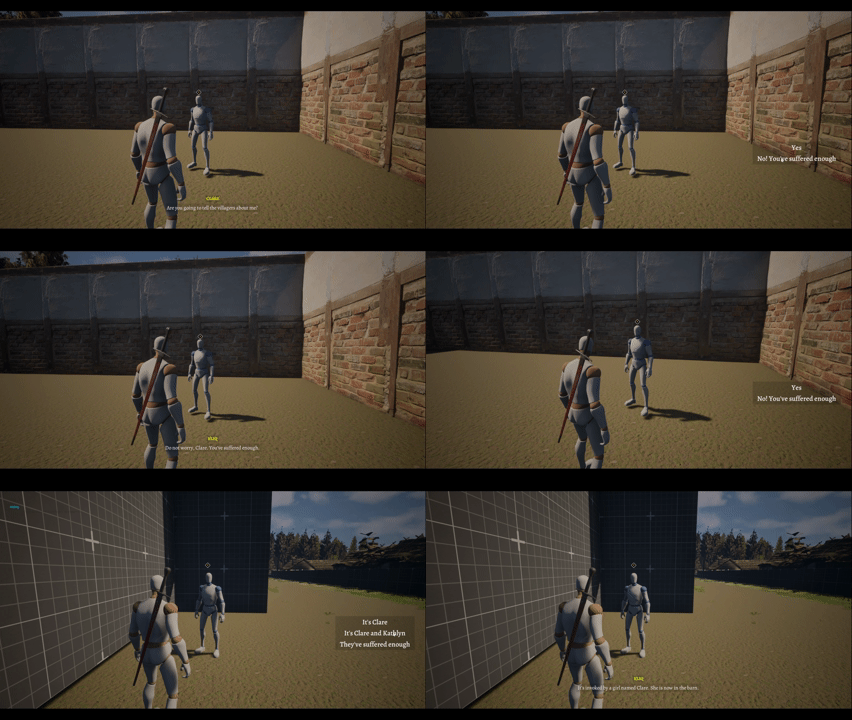
When Kliq reaches Clare, his opening dialogue shifts based on what he's learned along the way. Same meeting, different conversation.
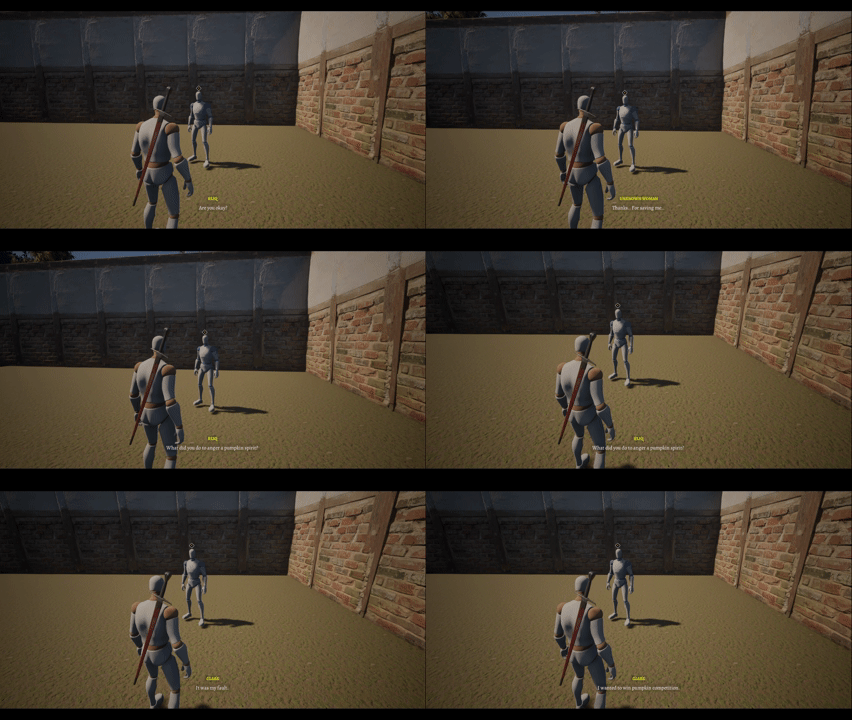
🎯 SCENARIO 1: The Direct Approach
Went straight to Lemuel, got the key, came directly here. Knows nothing about Clare.
KLIQ
"Who are you?"
CLARE
"I'm Clare. I... I was trying to win the competition."
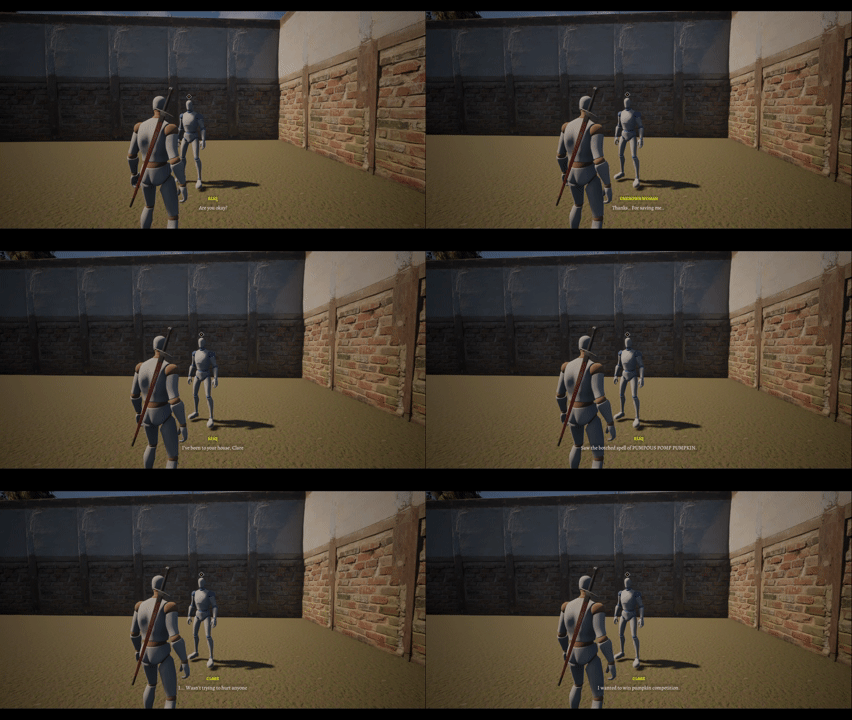
🔍 SCENARIO 2: Investigated the Garden
Found evidence of the ritual in Clare's garden. Knows it happened there but hasn't spoken to Kathlyn.
KLIQ
"I was in your garden. I saw what you did. What's your name?"
CLARE
"I'm Clare. Please... you have to understand, I wasn't trying to hurt anyone."
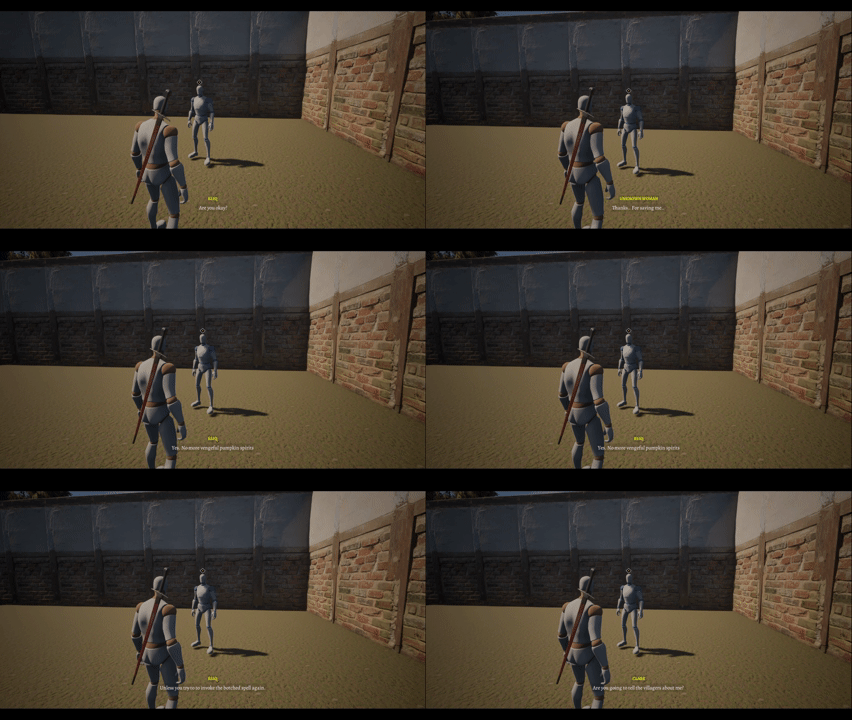
🎭 SCENARIO 3: Spoke to Kathlyn First
Found Kathlyn, spoke with her, knows both conspirators' names and their partnership.
KLIQ
"Kathlyn told me everything, Clare. I know what you both did."
CLARE
"... Yes. We both did this. Kathlyn wanted to help me."
⚔ PIVOTAL CHOICES ⚔
🎭 DIALOGUE DECISIONS WITH CONSEQUENCE
Getting the Barn Key
OPTION 1 - Report to Lemuel: Lemuel trusts you and gives the key without pressing for details.
OPTION 2 - Find Kathlyn: Discover her name in the book and seek her out for an alternate key source.
OPTION 2 - Find Kathlyn: Discover her name in the book and seek her out for an alternate key source.
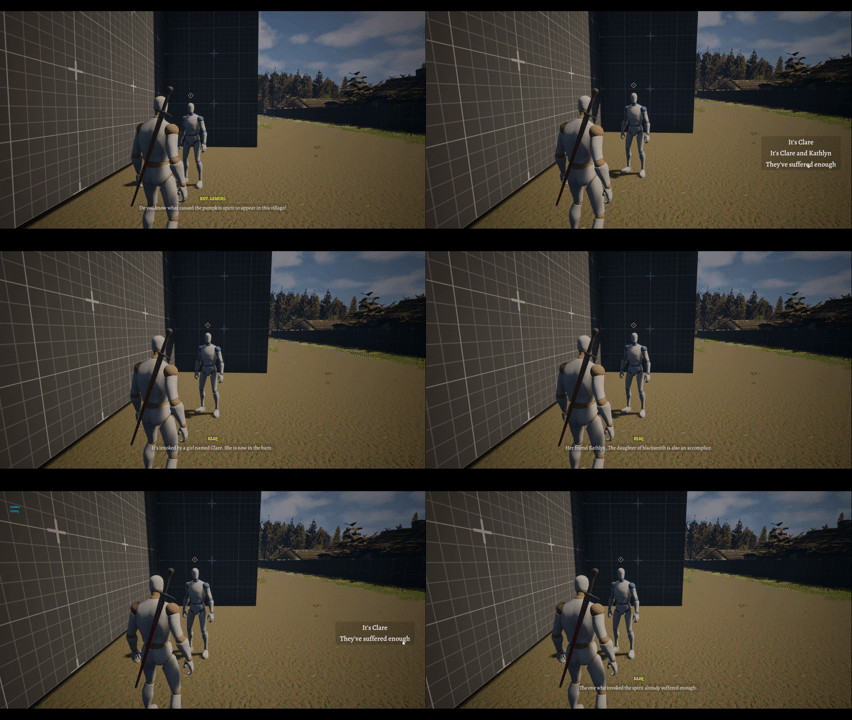
Responding to Clare (After Battle)
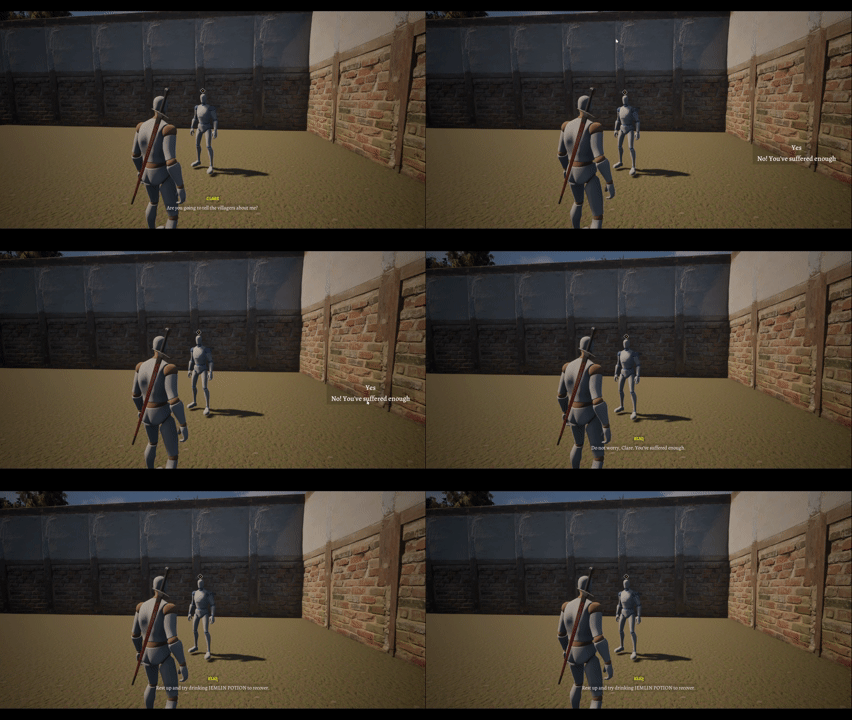
Assure Her
Clare becomes a future ally
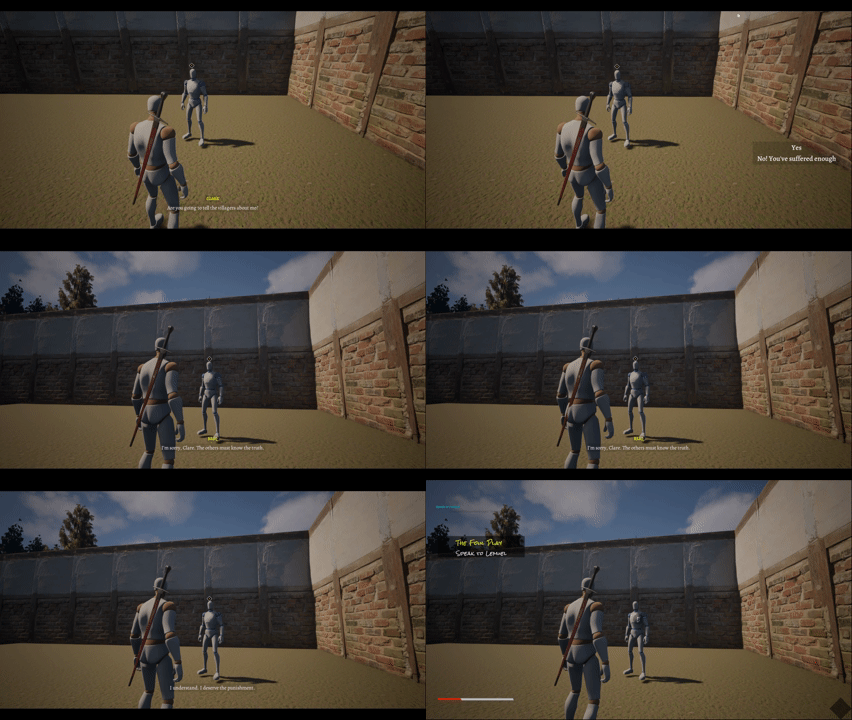
Judge Her
No alliance forms
CHOICE 1 - Assure Her: "I won't tell anyone. You're safe now." → Clare becomes a future ally.
CHOICE 2 - Judge Her: "You deserve punishment for what you've done." → No alliance forms.
CHOICE 2 - Judge Her: "You deserve punishment for what you've done." → No alliance forms.
Final Conversation with Lemuel
✓ BEST - Tell Nothing: Lemuel trusts your judgment. Everyone's secret is kept.
✗ WORST - Tell About Clare Only: Clare is banished from the village.
Tell About Both: Both face judgment. Full transparency with complex consequences.
✗ WORST - Tell About Clare Only: Clare is banished from the village.
Tell About Both: Both face judgment. Full transparency with complex consequences.
⚔ QUEST ENDINGS ⚔
🎬 OUTCOMES & CONSEQUENCES
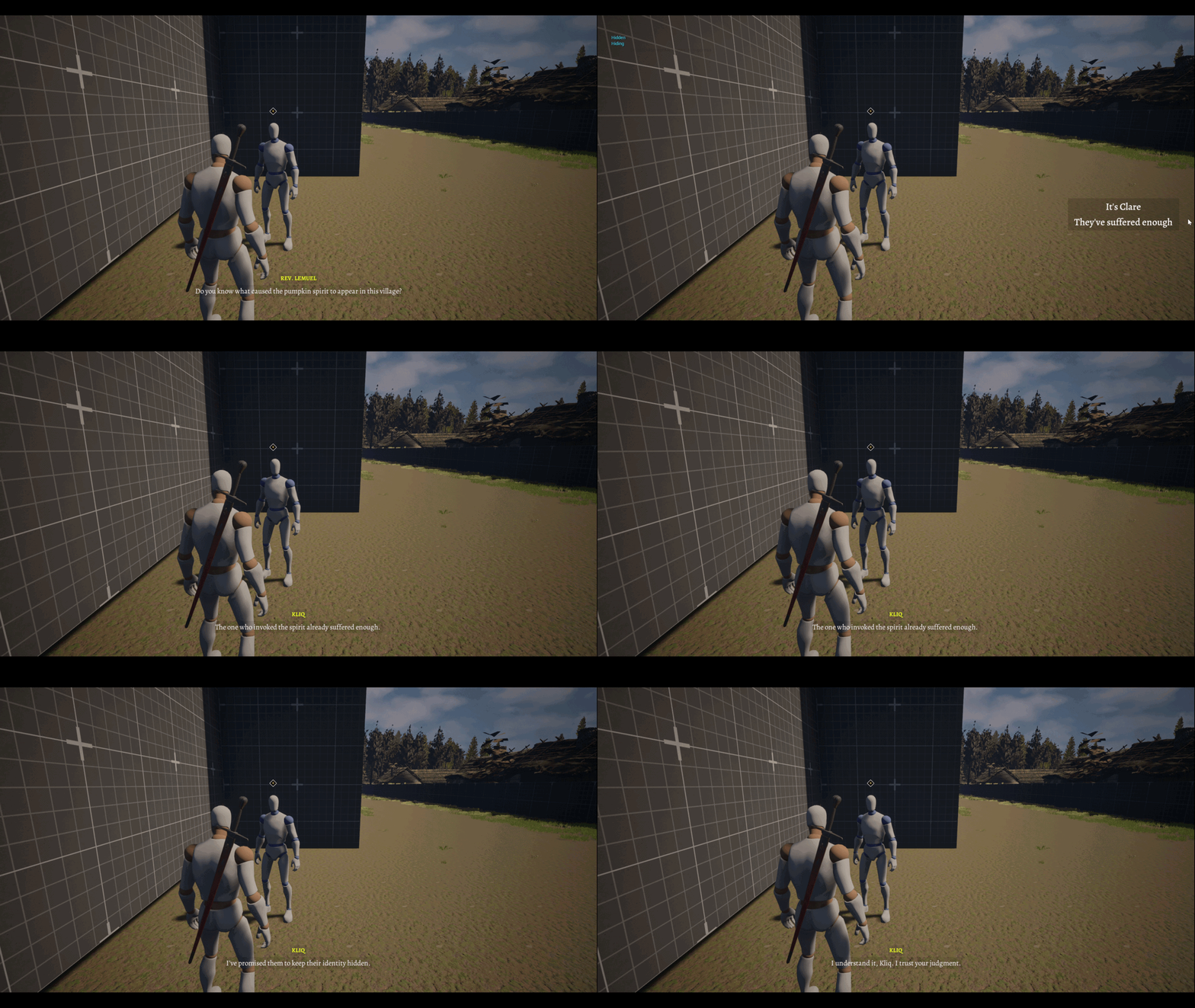
✓ Best Ending: Discretion
Tell Lemuel nothing. Both Clare and Kathlyn remain in the village. Clare becomes a future ally. Lemuel respects your judgment.
Future Quest: Clare can help Kliq in a future mission.
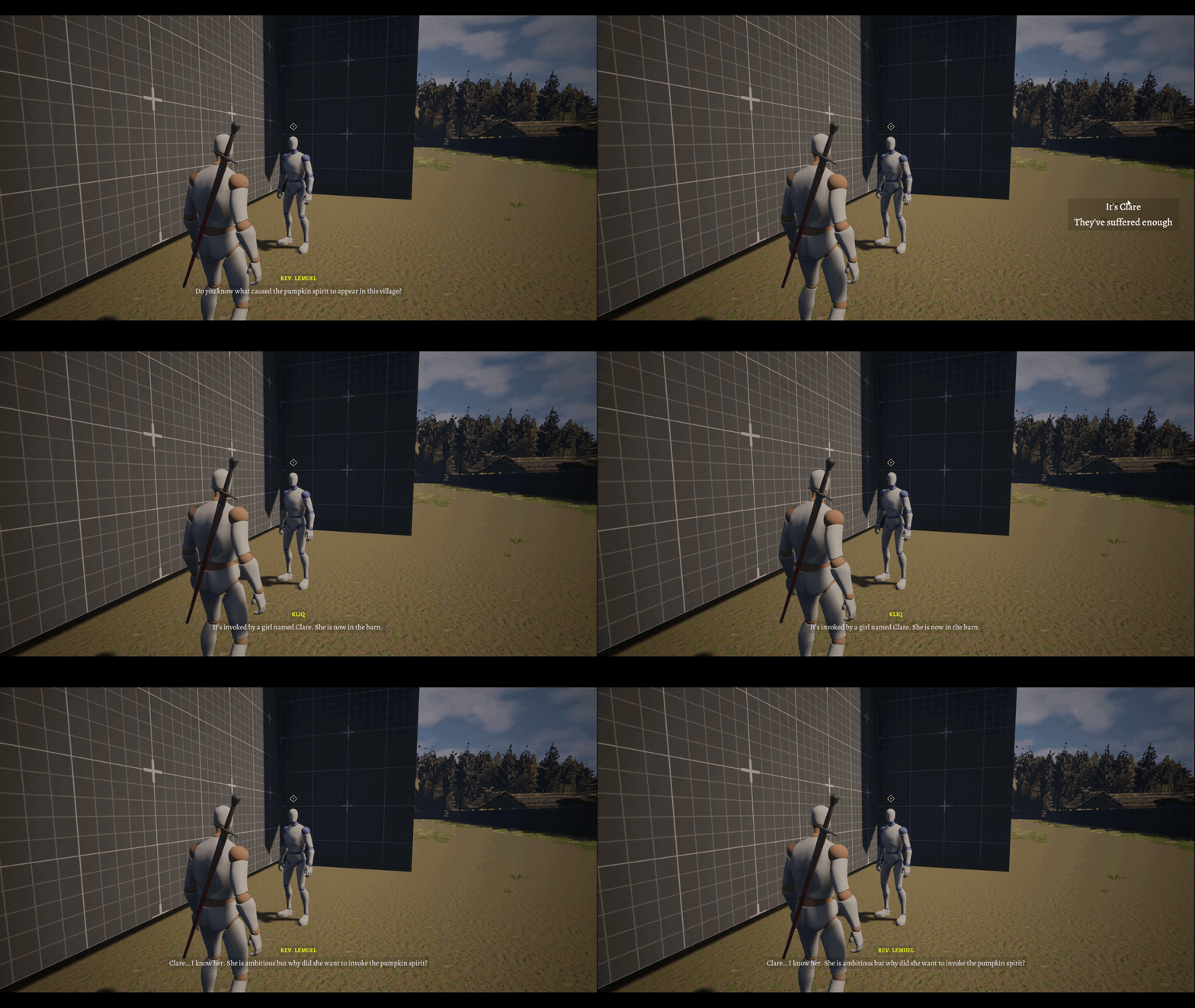
✗ Worst Ending: Exposure
Tell Lemuel only about Clare. He has no choice but to enforce justice. Clare is banished from Stone-Upon-Fleen. A dark ending born from incomplete mercy.
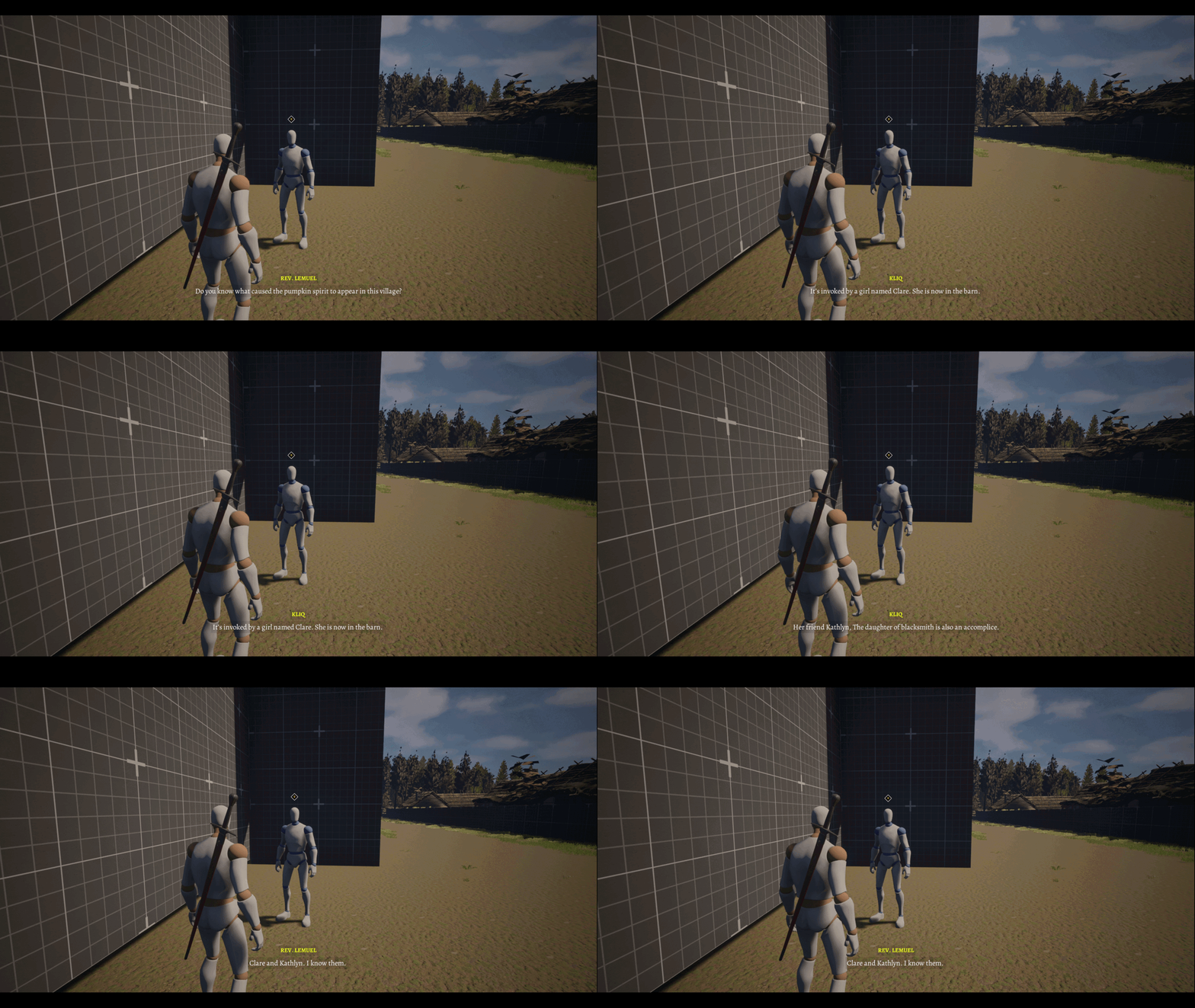
📋 Full Truth: Both Exposed
Reveal both Clare and Kathlyn's involvement. Lemuel must address both. Full transparency with complex consequences for both NPCs.
⚔ PLAYSTYLE BREAKDOWN
Every playstyle has a unique path through The Foul Play. These videos showcase each approach.
🎯 The Direct Path
Go straight to Lemuel for answers. Learn about the garden. Investigate. Confront Clare. Make moral choices. No detours.
🔎 The Investigation Path
Gather 3 clues from townsfolk (missing pumpkins, foul smell, sickness). Talk to Lemuel. Explore the garden thoroughly. Then confront Clare with full context.
💪 The Onslaught Path
Skip investigation entirely. Go straight to the barn. Use Onslaught skill to break the door. Confront the spirit. Bypass all preceding story beats. Direct action.
📊 ATTRIBUTE-BASED UNLOCKS
Player-invested skills directly unlock narrative content. No progression gating-just different options for different builds.
🔍 Discovery Attribute
Find magic vines leading to Clare's house. Investigate garden clues thoroughly.
💬 Charisma Attribute
Talk to Foy the garden helper. Charm him into revealing Clare's location.
💪 Onslaught Attribute
Break barn door. Skip investigation. Direct confrontation with the spirit.
🎭 Stealth Attribute
Kill spirit unseen. No witnesses. Nobody knows what really happened.
⚔ DESIGN PILLARS ⚔
🏛️ CORE DESIGN PRINCIPLES
These four pillars guided every decision in The Foul Play. They are the foundation of the quest's philosophy.
1
Player Agency
Every choice matters. Investigation path, dialogue response, final decision-all shape the outcome. Players don't feel railroaded; they feel in control of Kliq's story.
2
Moral Nuance
No clear "good" or "evil" path. Telling nothing is merciful but deceptive. Telling the truth is honest but destructive. Assuring Clare creates an ally but enables her crime. Players navigate complexity.
3
Reactive World
NPCs remember and react. Lemuel notices your judgment. Clare responds to mercy or harshness. Kathlyn's involvement changes if you know about her. The world isn't static-it watches and responds.
4
Accessibility
Combat specialists, sneaky players, investigators, diplomats-everyone has a valid path to completion. No playstyle is locked out. The quest adapts to who you are.
⚔ SYSTEMIC CONNECTIONS ⚔
🔗 HOW SYSTEMS INTERACT
The Foul Play isn't just dialogue and choices-it's a system where every element connects and reinforces the others.
PLAYER ATTRIBUTES
(Discovery, Charisma, Onslaught, Stealth)
↓
Unlocks Different Investigation Paths
↓
Different Dialogue Options Become Available
↓
NPC Knowledge & Reactions Change
↓
Leads to Different Quest Endings
↓
Future Quest Availability Changes
(Clare may become an ally OR be banished)
How This Creates Depth:
Knowledge Tracking: The system knows what Kliq has seen and heard. Dialogue adapts based on this knowledge.
Consequence Chains: Assuring Clare isn't just a nice moment-it unlocks future content. Banishing her removes an NPC permanently.
Playstyle Expression: A combat player and a stealth player experience the same quest completely differently, but both feel valid.
Replayability: New paths open based on different attribute choices. The quest isn't the same twice.
⚔ DESIGN LEARNINGS ⚔
💡 KEY INSIGHTS FROM BUILDING The Foul Play
Learning 1: Knowledge Matters More Than Morality
I realized the quest isn't about "right vs wrong" choices-it's about what the player knows. The same dialogue option means different things depending on context. Telling nothing is merciful if you've built empathy with Clare, but callous if you just met her. This taught me that narrative depth comes from context, not alignment systems.
Learning 2: Dynamic Dialogue Rewards Exploration
Initially, I thought dialogue would be static. But watching how opening lines changed (Direct "Who are you?" vs Investigation "I saw your garden" vs Full Knowledge "Kathlyn told me") showed me that exploration should be rewarded with unique dialogue. Players who investigated felt smarter. Players who rushed felt the pressure. This micro-variation had outsized narrative impact.
Learning 3: Attributes Should Gate Narrative, Not Combat
Most games use attributes for stat checks. But The Foul Play uses them to unlock different story moments. High Discovery unlocks the vine path. High Charisma lets you charm Foy. This meant character building directly shapes the narrative experience. It made attributes feel meaningful in a way stat bonuses never do.
Learning 4: NPCs Need Memory to Have Agency
I learned that consequence weight comes from NPCs remembering. Lemuel remembering whether Kliq lied, Clare remembering if he was merciful, Kathlyn remembering if she was protected-these memories make the world feel alive. Without memory, choices feel hollow. NPC recall systems are more important than branching dialogue.
Learning 5: Playstyle Flexibility Creates Depth, Not Simplicity
I worried that giving all playstyles a valid path would make the quest feel shallow. It did the opposite. A stealth player sneaking into the barn unseen, a combat player Onslaught-breaking the door, an investigator piecing together clues-same quest, three completely different experiences. Accessibility through playstyle choice enhances depth.
Learning 6: Moral Complexity Requires Trust in the Player
The biggest learning was trusting players to navigate moral ambiguity without a "good" marker. No quest giver saying "the right thing to do is..." Players had to make their own judgments about Clare's culpability, Lemuel's authority, and their own conscience. This required me to let go of directive narrative and trust player interpretation.
Learning 7: Consequences Don't Need to Be Dramatic
I initially thought consequences needed to be big (death, banishment, war). But the most meaningful consequence is a future quest unlocked or closed. Clare becoming an ally for a future mission feels more consequential than a death. It makes players feel their choices ripple forward, not just forward in the same narrative.
⚙ FINAL THOUGHTS ⚙
💡 THINGS I DID WELL
Non-linear narrative
By creating a non-linear narrative structure, I was able to give players more agency and allow them to explore the story in their own way. This made the quest feel more immersive and engaging, as players could choose their own path and make decisions that had real consequences.
Unique NPCs
By creating unique NPCs with their own personalities and motivations, I was able to create a more engaging and memorable experience for players. This helped players feel more invested in the story and the world, as they could connect with the characters on a deeper level.
Multiple Approaches
By allowing players to approach the quest in multiple ways, I was able to create a more dynamic and replayable experience. This encouraged players to experiment with different playstyles and strategies, and made the quest feel more rewarding for those who invested time in exploring all the options.
💡 THINGS I DO NOT LIKE
Change 1: Complex Narrative Structure
I would like to have a more complex narrative structure. For example, I would like to have more branching paths and more choices that affect the outcome of the quest. This would make the game more challenging and rewarding for players who invest in different attributes.
Change 2: Lack of Time
I would like to add additional quests and content to the game. For example, I would like to have more side quests and more content that is not directly related to the main quest. This would make the game more immersive and engaging for players who want to explore the world and learn more about the world building.
Change 3: Lack of Cinematics
I wish I could add more cinematics to the game. For example, I would like to have more cutscenes and more cinematic sequences that showcase the story rather than just conversation. This would make the game more immersive and engaging for players.